Little Reddings Primary School
A Lesson in Net-Zero Carbon
Bushey, Hertfordshire, United Kingdom
The Challenge
Across England, the government is investing almost 20 billion pounds in the School Rebuilding Programme, which is overseeing major rebuilding and refurbishment projects at schools and sixth-form colleges. All buildings in the programme must be built to the latest construction standards and be designed to be net-zero in operation.
As part of the programme, HKS was tasked with designing a replacement school for the community of Bushey, Hertfordshire. The 29-acre site, bordered by a main road and residential areas, required a design that integrates seamlessly into the urban fabric while prioritizing learning environments. Nearby residential developments and environmental features such as vegetation and a stream required careful planning to mitigate impacts and foster community integration. Also, site constraints such as flood zones and a drainage sewer posed additional challenges, necessitating innovative engineering solutions to ensure safety and sustainability.
The project called for the construction of a 2,440 sqm (26,264 sf) primary school to accommodate 420 students, as well as a 24-place nursery. The new building would be built concurrently with the phased demolition of the current school, excluding a 1980s extension that was to be repurposed as a crèche.
The Design Solution
The project was designed and developed with future generations in mind, embedding sustainability principles throughout the planning, design, and delivery stages. The scheme prioritises energy efficiency, responsible material selection, and long-term operational performance. Measures such as high‑performance building fabric, enhanced natural ventilation and daylighting, and energy‑efficient services reduce both environmental impact and running costs over the building’s lifecycle.
Success hinged on meeting ambitious sustainability targets within a tight budget and timeframe without compromising educational quality. Achieving carbon neutrality through energy-efficient systems and sustainable materials was crucial. To successfully meet its design goals required collaboration between the school, local authorities, architects, engineers, and construction teams.
HKS designed the project through RIBA Stage 4 (Technical Design).
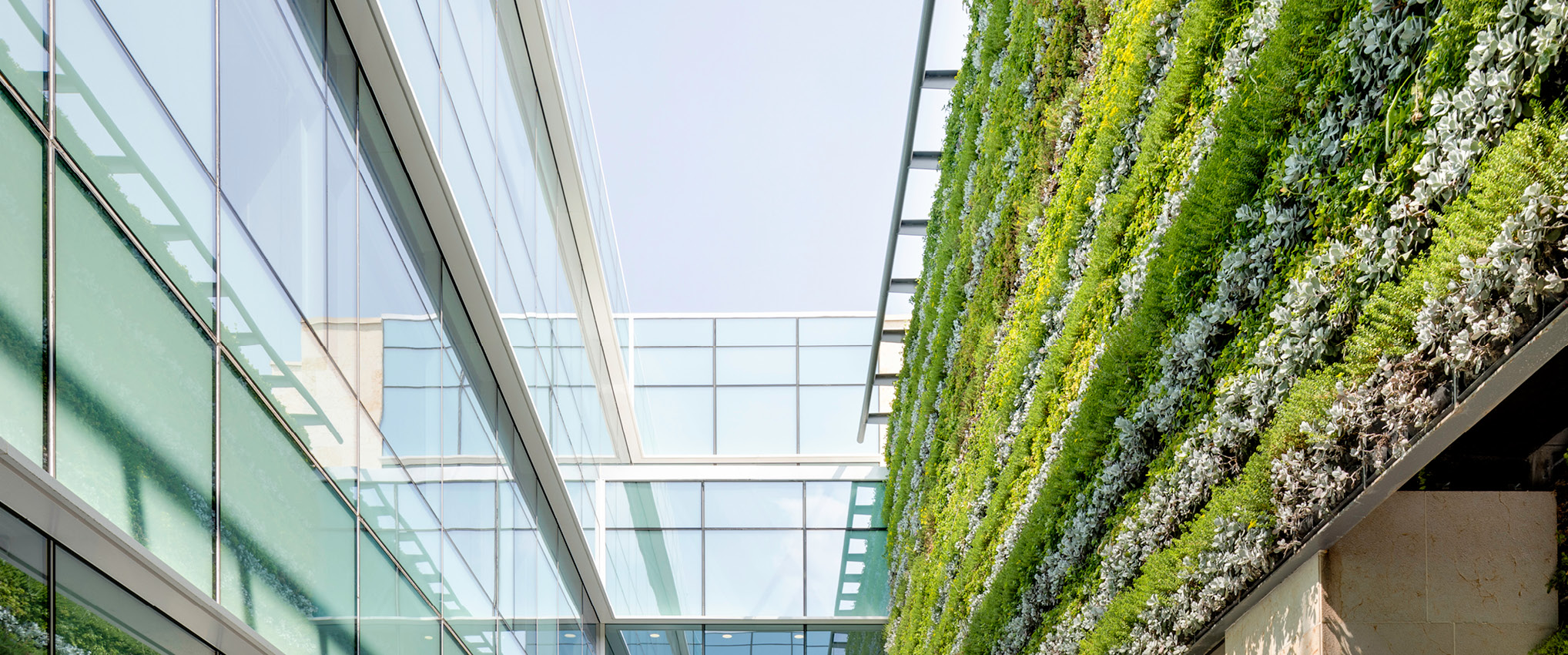
To adhere to net-zero carbon requirements, Little Reddings features a bio-solar roof that combines photovoltaic (PV) panels with a green roof. In addition, HKS optimized building massing for natural daylighting without compromising thermal comfort. The elevation design, employing a straightforward palette of materials and limited window types, facilitates precise control over building performance and creates an efficient internal environment.
Sustainable MEP strategies, such as Natural Ventilation with Heat Recycling (NVHR) units that are automated, hybrid ventilation systems designed for classrooms, as well as the use of off-site prefabricated structural timber panels were included in the design to minimize embodied carbon and the project’s construction footprint.
Material selection emphasized efficiency while minimizing construction impact on both residents and the school site. Construction build-ups underwent meticulous review to ensure high thermal performance aligned with energy modeling projections.
Embracing a structural timber panel system, or SIP system, offered several advantages, including increased off-site construction, waste reduction, and a diminished carbon footprint. This system encompasses the roof, first floor, external walls, and both load-bearing and non-load-bearing internal walls.
Forest School, a UK education model, is a key part of the school’s curriculum, so outdoor space is an essential design feature, with direct connection between indoor and outdoor spaces fundamental to the school’s layout.
The Design Impact
The project was designed and developed with future generations in mind. The learning environment was carefully designed to place student comfort and wellbeing at the forefront. Classrooms benefit from daylight, controlled acoustics, and thermal comfort, creating spaces that support concentration and learning throughout the school day. Flexible teaching spaces and appropriately designed specialist facilities enable a range of teaching styles and evolving curriculum needs, ensuring the building remains adaptable over time.
As a result, new students will attend a school that not only minimises its impact on the environment, but also actively supports their learning journey through comfortable, inclusive, and future‑ready facilities.
The building will produce significantly less GHG emissions than a traditional building of the same size and function. If operated as anticipated, its energy use will be 7% before Department for Education current targets thanks, in part of the SIPs panel system used. SIPs-based school buildings can reduce energy consumption by up to 50% compared to traditional buildings, improve indoor air quality, reduce construction and maintenance costs by up to 30%, and have a lower environmental impact than traditional school buildings. In addition to these quantifiable benefits, SIPs school buildings offer several other advantages, such as improved comfort and acoustics, durability and disaster resistance, and sustainability.

Project Features
- 2440 sqm (26,264 sf)
- Protected courtyard
- Outdoor/indoor direct connection
- Forest School approach
- SIPs panels
- Designed as net-zero carbon in operation