

Designing Student Health Centers for Success and Belonging on Campus
College campuses are large, diverse environments. From academic classrooms and student housing to dining, recreation and social hubs, the list of places needed to foster well-being on campus is seemingly endless. But even with access to myriad supportive spaces, only about 50% of students feel that their health and well-being is a priority of their college or university, according to recent data from the National College Health Assessment. Higher education institutions are taking note and re-thinking the role of one vital on-campus environment: student health and wellness centers.
By investing in building student health centers that go beyond providing basic services — places that support physical, mental, emotional and social well-being — colleges and universities can enhance holistic wellness and improve campus experience, which can lead to higher rates of student success and retention.
With a history of designing and delivering world-class education environments proven to support well-being, HKS’ multidisciplinary teams partner with colleges and universities in an evidence-based approach to student health center design. We create spaces that foster belonging and empower students to play a part in their own well-being.
Here, a few of our design and research leaders weigh in on how thoughtfully designed student health centers can drive positive outcomes on campus:
How do HKS teams engage with clients and stakeholders throughout the research and design process for student health centers?
Leonardo Gonzalez Sangri, Global Practice Director, Education: Student health and wellness centers should be understood as a foundational component of a university or college campus, and they have become even more critical as communities recognize the need for solid health frameworks. To succeed in any endeavor, we must start by leading healthy lives. Thoughtfully designed environments offer students essential services in accessible settings, helping them understand their health, seek care, and build supportive communities for their physical, mental, and emotional well-being. If a student is worried about their basic needs being met, then they will not be ready to succeed. As architects and collaborators, we understand that providing choice and designing welcoming and inclusive environments that foster a sense of belonging are the underpinning to delivering targeted outcomes in student wellness centers. A research-based approach continually builds evidence that allows our teams to begin from an informed position to identify design strategies connected to those health outcomes.
Renae Mantooth, PhD, Research Lead, Education: On a college campus, community is somewhat embedded and built in. Then when you graduate, you go off into the world and you suddenly don’t have that same community or support. A place like a student health center can really scaffold that transition and the process of learning what it means to advocate for your own health — they can provide students with the tools and skills that will enable them to take care of and advocate for themselves long term. At HKS, we seek to understand how different university systems approach student health and wellness environments. In my unique research role, I pair clients’ perspectives with my own experience as a professor at North Carolina State University, bringing lessons learned and perspectives from both to ask poignant and relevant questions that can help influence design strategies and positive outcomes in wellness centers.
Jessica Roddenberry, Studio Practice Leader, Education: Student health and wellness is no longer solely focused on providing care for students with physical or mental illnesses. In addition to the clinical and psychological services that student health centers offer, these centers are increasingly incorporating programs and spaces which seek to be more holistic and inclusive with health and wellness initiatives. These include dedicated areas for massage and aroma therapies, multipurpose rooms and outdoor areas to host healthy living events, sensory rooms and spaces for respite and quiet not otherwise offered on campuses. The approach is more proactive in highlighting and celebrating healthy living strategies and reduces the stigma often associated with asking for help, which for some, can be seen as a signal of weakness. By equipping students with the tools needed to engage with their own health, student health centers can help reduce illness and mental health struggles. These places are more than just buildings; they are an opportunity to create real and measurable impact by supporting strong and healthy communities.
Scott Baltimore, Office Design Leader: Student wellness centers hold the potential to have a meaningful impact on campus, not only for the people that use the building daily, but more globally in supporting student outcomes in all aspects of their lives as they build the tools to be successful later in life. A student’s college experience provides a foundation for their success moving forward. As designers, we see an incredible opportunity to partner with colleges and universities to deliver projects that move away from the former paradigm of an infirmary-like experience to provide a place that becomes a destination for students. The wellness center can now be a place that is positioned in the heart of campus serving students by offering programs and educational opportunities that build community. The idea of ownership is also critical. Wellness centers must adapt and grow over time to address evolving needs by providing students with an opportunity to actively participate in programming spaces such as art galleries, demonstration kitchens, and flexible gathering and ‘oasis’ spaces. These are all an integral part of a wellness sphere, ultimately helping to support a student’s potential to thrive during their time on campus.

How do HKS teams engage with clients and stakeholders throughout the research and design process for student health centers?
Gonzalez Sangri: Our process can help colleges and universities leverage their capital investments to deliver much more than a physical space. We focus on establishing clarity in guiding principles that enable the teams to deliver value beyond the project baseline by targeting outcomes of mental, physical, and emotional health.
We work hand in hand with our clients, campus communities and partners to bring a relevant, holistic perspective and approach. Our teams really go deep into understanding institutional goals, students’ health needs and staff support needs to develop guiding principles rooted in who they are, not just one-size-fits-all approaches. We create robust user personas to identify the various states of mind, lifestyles and experiences of a diverse range of people who may engage with the building or environment we’re designing. Then, we target design strategies tied to delivering the outcomes that support the full range of prospective users.

Mantooth: In our design research approaches, we rely onstudent voices and experiences, as well as the mindset of people who are educating, providing care, managing operations and running buildings on campus. For student health centers, we connect with students, clinicians, administrative staff and more, working with them to understand what goals they have and to think about the built environment as a tool to achieve the goals that they can’t currently achieve. We use design diagnostic methods such as shadowing and observations to see how a current facility is being used and conduct highly specified interviews with individuals that can help us understand current points of joy and pain and get at the heart of what may be needed in a new environment. That level of deep engagement and data collection is necessary for our user personas to be meaningful and appropriately support design.
We take time with our client partners to understand what different measures of success they are looking for and how they support programs through funding and resource allocation. We use that information to evaluate our own success metrics for building projects, expanding beyond simple occupancy or usage rates. Understanding what our client representatives are responsible and accountable for helps us incorporate more thoughtful, outcome-driven strategies into our research process and our designs.

What are some key considerations that influence the overall design and planning strategy of student health centers?
Baltimore: These environments play a transformational role on campus and afford opportunities to create a destination for students even when they are not sick. Designing them starts with recognizing that wellness is multi-dimensional. Physical, mental, emotional, spiritual, social, and environmental factors all support student well-being and can materialize in a building in many ways. There are several reoccurring themes and opportunities in design and planning: the need to project a welcoming image for students arriving on campus; the ability to guide students discretely to their destination; and encouraging movement and active engagement are just a few. We also have opportunities in the early planning phases to capitalize on the potential synergies between spaces or functions that may have previously been distinct or isolated on campus. For example, adjacencies between medical and psychological services, case management, and outreach programs and providers allow for a more integrated, collaborative approach to student wellness.

Roddenberry: A wellness center’s location can enhance impact on the students and on the broader campus community. We have seen a lot of success when the health and wellness centers are co-located on campus with other student-focused programs such as housing and/or recreation centers. When centrally located with other student life programs, these centers are extremely accessible and often transform into campus hubs like student centers. This placement enables students to form daily habits that incorporate healthy activities and behaviors. There is also often a need to distribute certain wellness services across the campus to maximize access and success such as food pantries, community kitchens and sensory rooms within campus libraries to name a few. We collaborate with our client teams to holistically evaluate their programs and identify outcome-driven strategies that enable the built environment to promote their mission and outreach initiatives.

Talk about some of the specific design choices that are successful in these environments. How do they make a difference?
Baltimore: Architectural strategies are the way in which we, as designers, reinforce many of the overarching goals for the building. We use biophilic principles — natural materials, access to daylight, and connect indoor and outdoor spaces to make them as welcoming as they can be. Transparency is critical to invite students into the building and includes the added benefit of bringing natural daylight into spaces that may have historically been denied access to natural daylight. There is also the potential to provide greater connectivity between spaces internally, promoting team-based collaborative environments. The idea of choice is also critical, so we seek to design spaces that give students and staff options depending on the specific need or setting that is required. We also work with our clients and partners to design spaces that can provide long-term value, which often means designing for multifunctionality and building in flexibility that nurtures and responds to how students and staff may want to use the building differently in the years to come.
Roddenberry: When we’re creating spaces on campus that feel welcoming and supportive, designers need to consider all scales. Scale relates to both the size of the spaces, as well as aesthetics and how people feel. We aim to incorporate small nooks and respite spaces that offer designated places for students and staff to seek out areas for quiet study or to take a moment for themselves. Group therapy and sensory zones provide spaces for individuals to gather and help to enhance their sense of belonging as students grow their community. Collaboration and convening areas offer opportunities for educational sessions or celebrations. As we design for various outcomes, we believe it’s crucial to find the right balance of flexibility and specificity and always to create a welcoming environment that meets diverse needs. While health and wellness centers have clinical program components, we want to ensure they do not feel like exactly like a healthcare environment but are comfortable places where students can feel more at home than they would in an off-campus health facility.
Partnering for Success on Campus
Student health and wellness centers are increasingly crucial environments in today’s world. When designed with a research-based and engagement-driven approach, they have the power to underpin student success and institutional resilience. We unite our passion for crafting quality education environments with cross-disciplinary expertise in health, mixed-use developments, hospitality and planning, drawing on best practices so we can support clients and the staff and students whose health and well-being is invaluable for our collective future.
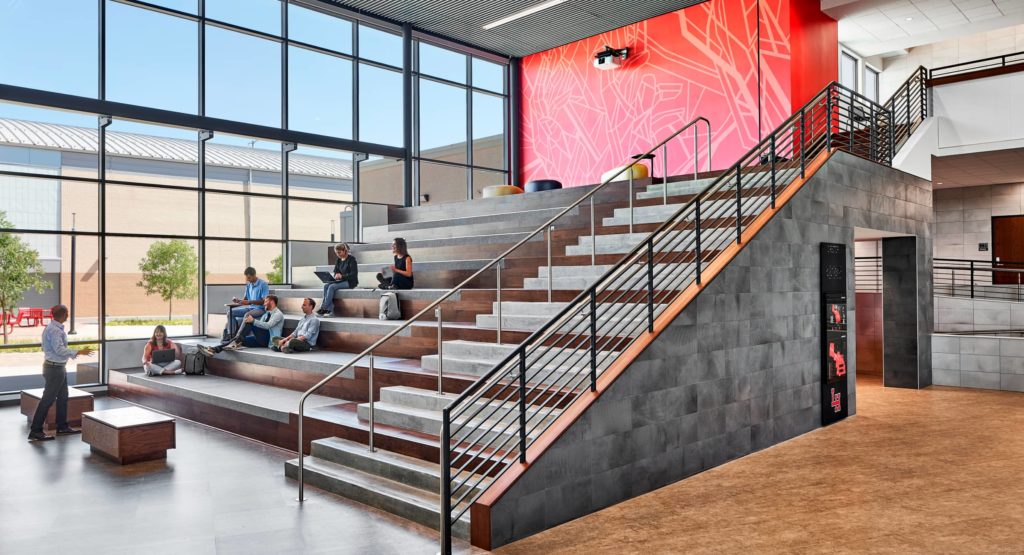
Projects featured in hero image: Florida International University Parkview Housing & Recreation Center, UC San Diego Theatre District Living and Learning Neighborhood (Designed by HKS and EYRC), and The Ohio State University North Residential District Transformation.