Wayne State University Health Sciences Research Building
Closing the gap between scientific breakthrough and real-world benefit
Detroit, Michigan, USA
The Challenge
Anchored in the heart of Detroit, the new Wayne State University Health Sciences and Research Building will catalyze translational and interdisciplinary research that directly benefits the community. A foundational goal for this facility is to rebuild public trust and address persistent health disparities within the community. University leaders, designers and researchers are focused on how to quickly translate lab discoveries into meaningful, local impact for Detroit residents. The facility also needs to attract and retain top research talent while improving connections and collaboration within the building, across the School of Medicine campus and beyond to the campus at large. The project site is an existing parking lot in an area lacking connection to nature, public space and other campus buildings. Detroit’s aging stormwater systems added another layer of complexity.
The Design Solution
Building placement and orientation during site development prioritized connections to the Medical School and neighboring research facilities, as well as the community. The welcoming streetscape leads visitors and researchers into the building, where they are greeted by a community technology center. A new bridge connects the medical school to clinical arms and community organizations (the medical school has a community impact program working with Detroit residents.)
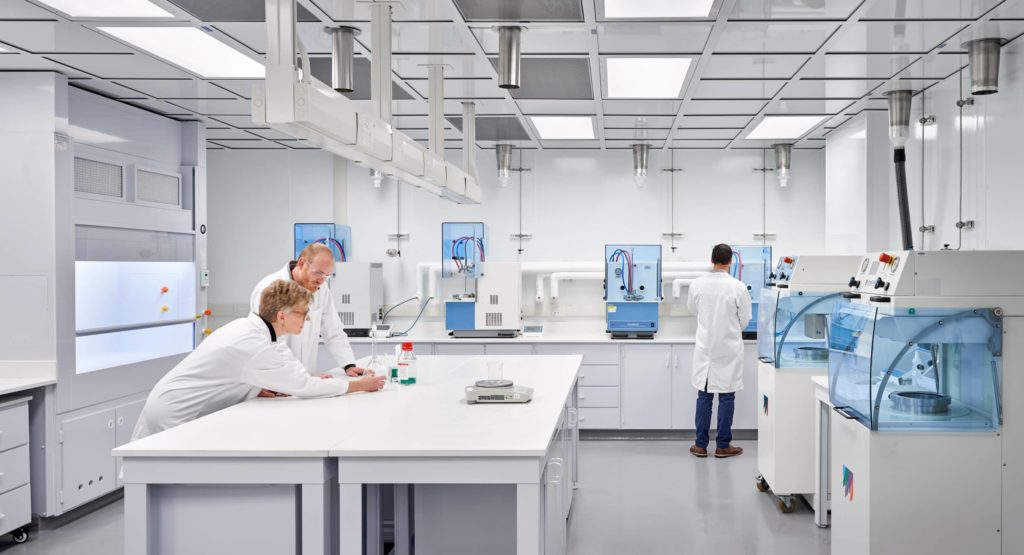
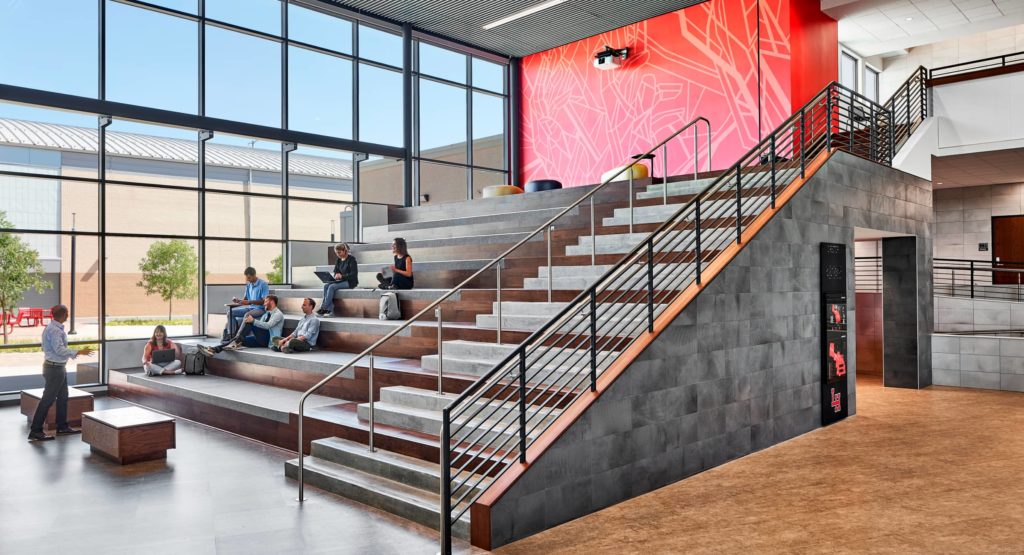
The transparent building and street-facing wet labs visually connect and engage with the community. Supporting 360 researchers across five floors, the building is organized with flexibility and social connection in mind. The building is designed to evolve with science and adapt to changing workflows. The lab modules, adjacency planning and shared spaces are designed with future-proofing in mind. Hub points are centrally located on each floor, creating opportunities for knowledge sharing.
Built on the DNA of Detroit, this platform for accessible and collaborative research aims to bring wellness to researchers and the communities they serve.
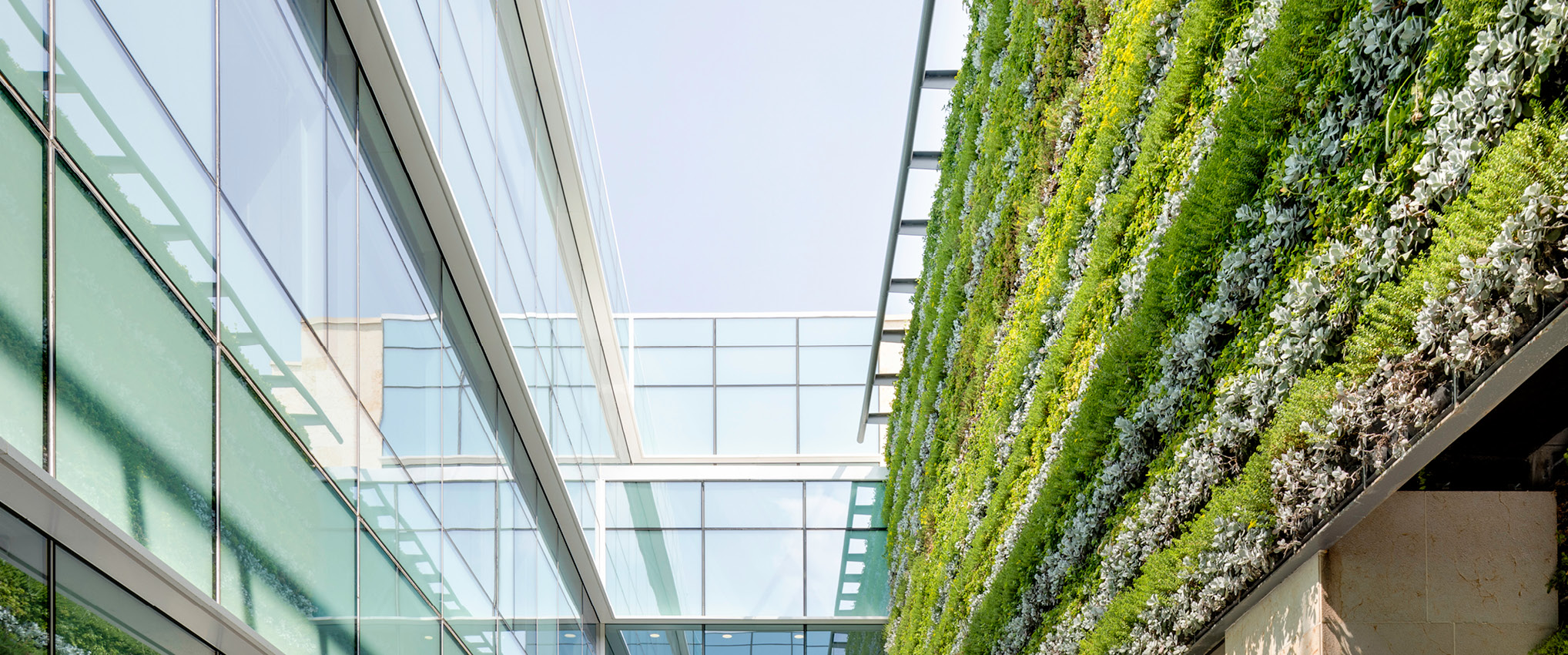
The design activates the ground level with indoor and outdoor community spaces and gardens. The landscape design and gardens support better management of stormwater while also supporting the natural habitat and providing respite to visitors.
Project sustainability goals reflect the 10 measures of design excellence and were established early through an integrated design charette with WSU representatives and the design team. Innovative strategies align with the WSU Sustainability Strategic Plan, place-based opportunities specific to Detroit, the energy challenges particular to research buildings and university operational constraints. Examples include a stormwater system that fosters habitat and wellness, calibrated solar shades and bird-friendly glass that balance daylight and glare, and locally prefabricated concrete panels that enhance efficiency and regional character. The project targets LEED Gold certification, making building performance visible and measurable. In addition to the visual benefits of a carefully designed landscape, the site is doing work in fully managing the stormwater on site, putting building science on display.
The Design Impact
At 159,000 square feet, Wayne State University’s new Health Sciences Research Building transforms a former parking lot in Midtown Detroit into a hub for discovery, collaboration and community health. Designed to close the typical 10–15-year gap between scientific breakthrough and real-world benefit, the facility breaks down historic research silos to promote transdisciplinary collaboration among WSU programs and partners such as the Karmanos Cancer Institute and McLaren Health Care. Highly adaptable laboratories and flexible core spaces enable teams to evolve research quickly to address Detroit’s most pressing health issues, while “science on display” features—like a glass-encased central stair and transparent lab zones—make innovation visible and inviting.
At multiple scales, the building strengthens connectivity across campus and community. Pedestrian bridges, green courtyards and a teaching garden model sustainable design while engaging visitors in visible research activity. The ground floor houses a community engagement center that invites Detroit residents to participate in outreach and health studies, fostering more inclusive research cohorts and local recruitment. Together, these strategies transform an underused site into a living demonstration of collaboration, sustainability, and equitable impact—accelerating the delivery of therapies, uplifting neighborhoods, and redefining how science serves society.

Project Features
- MICR Laboratory
- Proteomics Laboratory
- Lipidomics Laboratory
- Up to 48 principal investigators with dedicated wet lab space and dry/office/workroom space
- Scientific research areas of focus that include cancer, immunology, systems biology, neurology and infectious diseases
- Community engagement spaces that include a technology center, multipurpose/conference room and outdoor gathering spaces
- Bridge connection to Scott Hall Medical Sciences
- Ground Level Connection to Elliman Research Building